Soomaa farmers lose 150 cattle to wolves as court blocks hunting permit

Farmers in Soomaa in southwest Estonia have been facing wolf attacks on livestock as well as bears destroying feed. Hunting permits were suspended soon after being issued.
While the Environmental Board issued hunting permits, following the attacks, courts suspended them within hours following a legal challenge. Wolf cull season starts in November in any case.
Farmer Tiit Soa, who raises cattle in Soomaa, told "Aktuaalne kaamera" he had never before seen wolf attacks on this scale, and even larger livestock like cows have not escaped the wolves. Soa says he has lost as many as 150 cattle, a quarter of his total herd, to wolf attacks.
The Environmental Board puts the number of cases of wolf attacks this year, up to October 30, at just one more than that – 151.
"The number of large predators needs to be brought under control, and common sense is needed," Soa said.
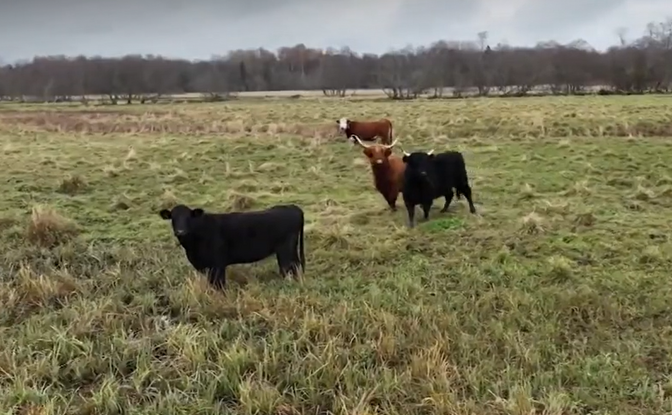
Soa estimates the economic loss resulting from the attacks to be around two hundred thousand euros. To qualify for compensation, however, owners must first have implemented all preventive measures, including the installation of electric fences.
However, as a boggy area, the natural conditions in Soomaa, a national park, are distinct, so much so that the large fluctuations in water levels make it almost impossible to install an electric fence which would meet the board's requirements, Soa said.
"The Environmental Board says you have to erect a fence. We built that fence, and the wolf came that very night and killed two calves straight away. The only thing that helps is physically standing guard over the herd, occasionally setting off fireworks rockets and driving around."
Soa has to effectively maintain guard on his livestock round the clock, which he said is starting to affect his health.
According to the Ministry of Climate, responsibility for the herd lies primarily with its owner.
"We must still focus on prevention, and if it is not possible to keep animals in a particular location, or if it is not possible to keep animals of a certain age there, then livestock farmers must also consider exactly where they keep their animals," said Aimar Rakko, head of hunting at the Ministry of Climate's forestry department.
Tanel Türna, head of the Environmental Board's hunting and aquatic wildlife department, suggested a change of tactics.
"Perhaps the same manpower being used to drive around the area could instead be directed towards gathering the calves together in the evenings. It certainly wouldn't be an easy undertaking, but it would produce results. The alternative is that these wolves will keep coming back for as long as they have the opportunity to get hold of something somewhere," Türna said.
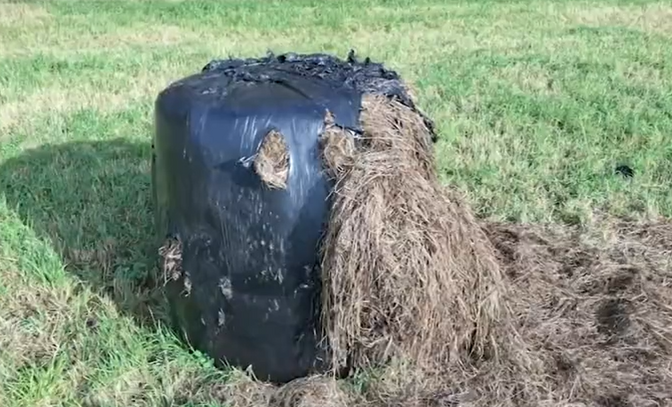
Bears have also appeared in Soomaa this year and while they have not reportedly slaughtered livestock, they have instead raided hay bales, stored as animal fodder. The Environmental Board has issued 64 hunting permits, 26 of which have been suspended by a court at the request of the Eesti Suurkiskjad (Large Carnivores) NGO. The latest permits were suspended within two hours the Friday before last, October 23.
The same NGO has successfully appealed to the courts in the past to suspend large predator culls. The wolf cull season usually runs from November 1 to the following February. Bear cull season runs in the fall and has just ended.
--
Follow ERR News on Facebook and Twitter and never miss an update!
Editor: Andrew Whyte, Marko Tooming


