Meelis Maripuu: Are we afraid of our history or ashamed of it?
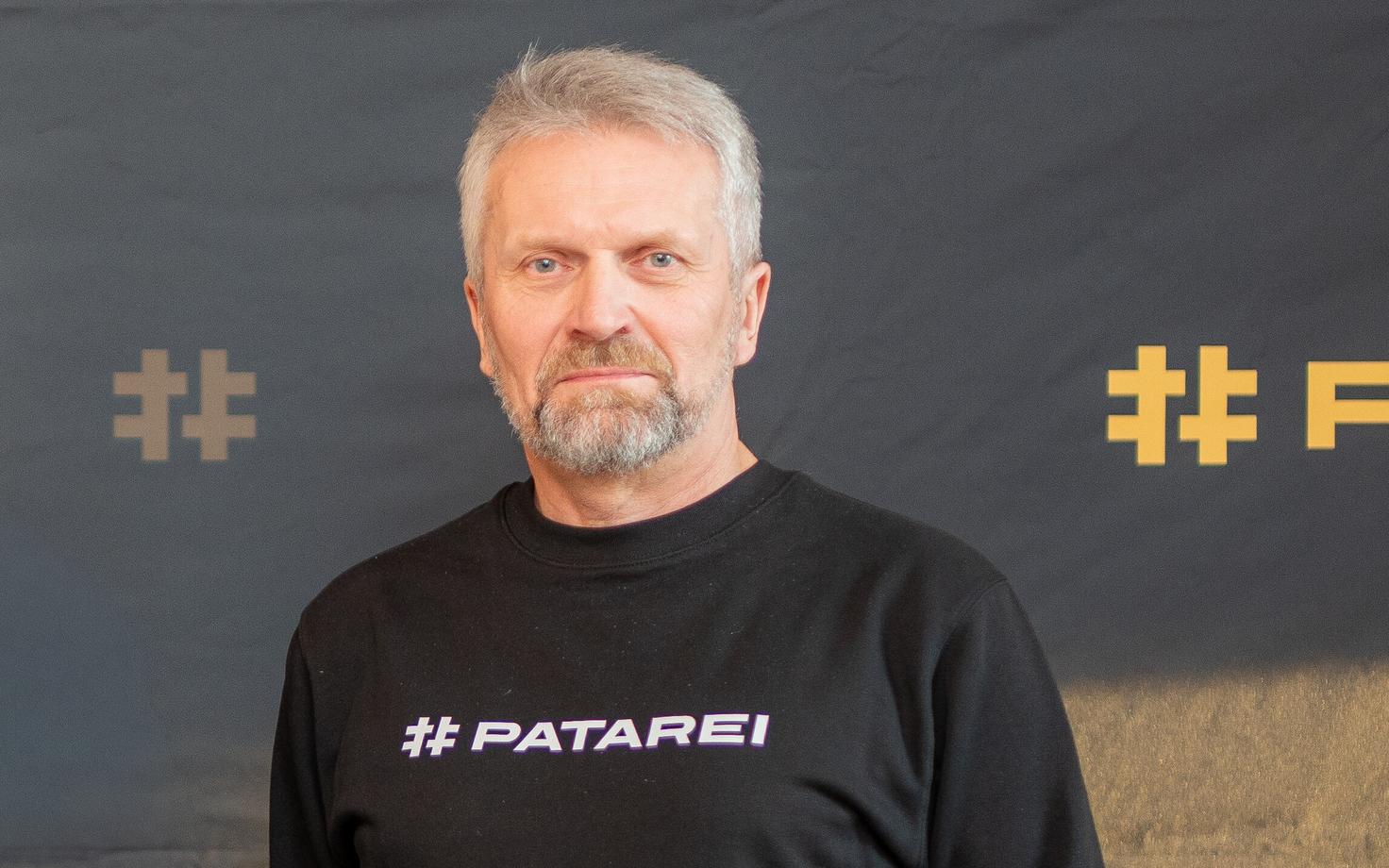
The Museum for the Victims of Communism, scheduled to open in a scaled-back form on June 14 next year, has reached a dead end, Meelis Maripuu writes. With no clear decision on future funding for the Estonian Institute of Historical Memory and the museum, there is no guarantee the institution will be able to operate after opening.
This week, European Union member states imposed sanctions on a Russian company involved in organizing disinformation campaigns. The Propastop blog's analysis, "Monuments once again as a weapon of Russian propaganda," shed light on another chapter of Russia's information warfare.
In recent days, an active campaign has been launched based on the fact that, following the start of Russia's full-scale war against Ukraine, Estonia reached a political consensus and removed most Soviet occupation monuments from public spaces. Russia has always viewed these monuments as symbols of its presence and superiority.
As part of the current campaign, this is being portrayed as support for Nazism, with the aim of once again reinforcing Russia's image as the "liberator" of World War II. Beyond the Russian domestic audience, the message is also aimed at Western European publics, where the legacy of the Cold War still provides fertile ground for such narratives.
World War II triggered a crisis in our society that lasted more than 50 years. We lost nearly one-fifth of our population: tens of thousands were murdered, imprisoned, deported or forced to flee their homeland.
While the identity of Estonians as an independent people in the early decades of the 20th century was shaped by the National Awakening, the Russification era and, above all, the War of Independence, the identity of Estonia and Estonians in the 21st century has been shaped by the occupations of the recent past.
Although the Soviet occupation ended with a liberating moment that gave society a tremendous positive boost, it is still decades of Soviet terror that define us. Recovering from that experience has required far more time and resources than recovering from World War I and the War of Independence.
Over the years, several authors have argued that our society has become overly attached to narratives of suffering and continues to define itself largely through historical injustice, hindering its ability to move forward.
Indeed, the observation that "almost every Estonian family suffered under Soviet repression" has become such a common phrase that it no longer seems to require proof. It creates the impression that we have surrounded ourselves with stories of our ancestors' suffering, stories that today's young people grow up hearing. And, supposedly, those stories prevent them from fully embracing the progressive world around them.
At the same time, researchers of repression repeatedly encounter what is known as intergenerational silence. Parents who experienced repression remain silent to protect their children, while children do not ask because they sense their parents' pain. Under the communist regime, this was a pragmatic choice because speaking openly could bring new punishment.
After Estonia regained independence, that obstacle disappeared. During the initial years of intense efforts to uncover the past, many stories were recorded, and hopefully even more were passed on within families. The Estonian Institute of Historical Memory has also documented these experiences and made them available through the oral history portal Kogu Me Lugu.
A museum alone cannot reach everyone. Just as important is the story of every family, and if those stories are not told, they disappear.
The struggle with Russia over the image of the "liberator" has continued with varying success for decades. One landmark event was the Bronze Night riots of April 2007, which ultimately led the government to relocate the Bronze Soldier, known as Alyosha, from Tõnismägi to the Military Cemetery.
On August 23, 2018, Estonia's national memorial to the victims of communism was opened at Maarjamäe. Earlier that spring, the government tasked the Ministry of Justice with establishing a Museum and Research Center for the Crimes of Communism in the former Patarei Prison, delegating responsibility for the project to the Estonian Institute of Historical Memory.
The museum's focus is on commemorating the violence and victims of communist regimes. Its exhibition will provide an overview of the activities of communist regimes in our region and around the world, as well as their continuing impact today.
The museum is intended to serve as a leading educational and research center in its field while supporting Estonia's strategic communication efforts.
With funding from the Ministry of Justice and Digital Affairs, the institute has advanced the project step by step. However, budget cuts have ultimately forced us to leave one-third of the planned exhibition unfinished.
As we prepare to open the Patarei museum, we naturally meet many different people. We are also interested in their personal stories and regularly test public awareness of the subjects we address.
If we are to believe the loud criticism that Estonian society is trapped in a victim narrative, then one would expect young people, who have grown up in that environment, to possess an obvious understanding of these topics.
Yet when meeting with a group of university students, the question arose as to why the museum is scheduled to open specifically on June 14.
To spare readers the embarrassment, I will point out that June 14 marks Estonia's only official national day of mourning, commemorating the mass deportations of June 1941. National flags are flown at half-staff on that day.
Unfortunately, not a single student present made the connection between June 14 and a museum dedicated to the victims of communism.
That encounter made me wonder what stories about the years of Red Terror have been shared by well-known public figures, stories that might resonate with others. After all, we are constantly told that almost every Estonian family experienced Soviet repression and that these stories are discussed almost too much.
Artificial intelligence now provides convenient tools for obtaining at least an initial impression. While the students' lack of understanding of our recent history and national commemorations was disappointing but not especially surprising, examining the public statements of opinion leaders and prominent figures produced a genuine surprise.
Active politicians were deliberately excluded from the search. Former Prime Minister Kaja Kallas, for example, is well known for her detailed knowledge of the darker chapters of her family history.
Among entrepreneurs, musicians, journalists and other public figures, however, there were only a handful of fragments, a few touching memories. Beyond that, there was emptiness and silence.
Are we afraid of our history or ashamed of it? Is this a subconscious attempt to shield ourselves from uncomfortable thoughts?
We saw something similar when a destroyed Russian tank was displayed in Tallinn on the first anniversary of Russia's full-scale invasion of Ukraine. Some people objected that "children should not be shown ugly things."
We ultimately removed many Soviet monuments from public spaces, yet the Soviet memorial complex at Maarjamäe remains trapped in an endless game of reinterpretation, and even that exists largely in words rather than action.
The Museum for the Victims of Communism, which is due to open in a reduced form on June 14 next year, has now reached a dead end.
Liisa Pakosta, the minister of justice and digital affairs responsible for the project, has argued in the media that the Patarei museum is essentially a private initiative, albeit an important one, that the state simply cannot afford to fund and that private donors should take over.
Formally, that is true, since the Estonian Institute of Historical Memory is a private foundation. However, we launched this project based on government instructions and have invested public funds in it for years.
Because there is still no certainty about how and to what extent the institute and the museum will be funded, there is no guarantee that the museum will actually operate after it opens. At present, there is no staff funding in place. The possibility that the institute's research activities may be terminated cannot be ruled out.
The generations with firsthand experience of Soviet society are inevitably leaving active public life, one by one, to be replaced by new generations.
Our post-Soviet opening to the world is now a full generation in the past, and the illusion of an increasingly liberal and globalized world during the intervening decades has created a sense of alienation and silence about our own origins.
At the societal level, such silence can lead to important lessons being forgotten and past mistakes being repeated.
This is happening at a time when the world around us, and we along with it, have entered a new global crisis. If we fail to engage with our own history, we inevitably contribute to the fulfillment of Russia's information warfare objectives.
--
Editor: Kaupo Meiel, Argo Ideon


