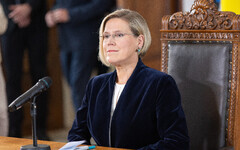
Skip to main menu 21.10.26 NEWS ... Justice and Digital Affairs Minister Liisa Pakosta calls for stronger international regulation of AI to protect national sovereignty, smaller languages and cultures.
21.10.26 NEWS ... The Reform Party is aiming for 20 seats after the March elections for a strong team with which to defend the liberal worldview, Prime Minister Kristen Michal said.
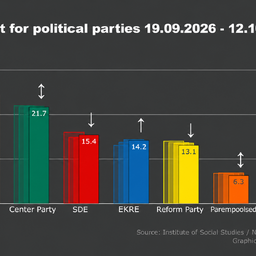
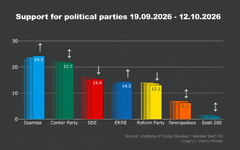
21.10.26 NEWS ... The Reform Party, which saw its support increase in September, has seen a slip of 1.5 percentage points in the latest Norstat poll commissioned by the Ühiskonnauuringute Instituut.
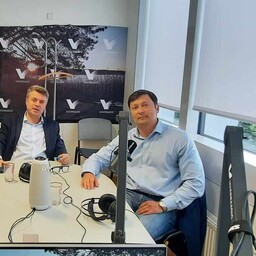
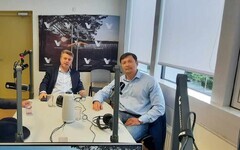
20.10.26 NEWS ... According to agency founder and creative director Joel Volkov, the deciding factor was the Reform Party's values, which can stand up to far-right populist politics.
20.10.26 NEWS ... A vote of no confidence initiated by the opposition in the Reform-Eesti 200 minority government failed on Monday evening.
18.10.26 NEWS ... Eesti 200 decided at its council meeting Sunday not to merge with the non-parliamentary Estonian Greens ahead of the 2027 general elections.
18.10.26 NEWS ... The council of the Eesti 200 party is meeting Sunday, with discussions focusing on the future of the party whose support is well below the electoral threshold ahead of the March 7 Riigikogu elections.
17.10.26 NEWS ... Prime Minister and Reform Party chair Kristen Michal says Estonia's economy is growing twice as fast as the EU average, as Reform pledges a clear course in the 2027 elections.
16.10.26 NEWS ... Eesti 200 MPs Ando Kiviberg and Toomas Uibo say their struggling coalition party should skip next March's Riigikogu elections and instead focus on rebuilding for 2031.
16.10.26 NEWS ... The Interior Ministry plans to redesign Estonian passports and add new security features, with blue covers returning for citizen passports from 2030.
15.10.26 NEWS ... Eesti 200 chair Kristina Kallas is to propose at Sunday's party board meeting that the party run alongside the Greens in the March 2027 Riigikogu elections.
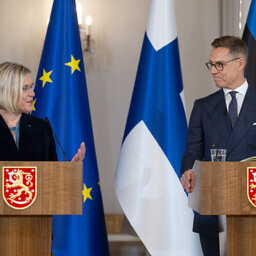
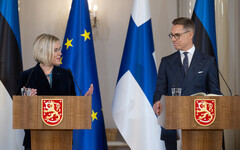
15.10.26 NEWS ... Newly inaugurated Estonian President Ülle Madise met Finnish President Alexander Stubb in Helsinki on Wednesday to discuss European security and Nordic-Baltic cooperation.
15.10.26 NEWS ... The Riigikogu has passed a law allowing young people to vote in European Parliament elections from the age of 16 and stand as candidates from the age of 18, starting in 2029.
14.10.26 NEWS ... The opposition Social Democrats (SDE) will not be joining a no-confidence motion against Prime Minister Kristen Michal's government before a clear plan is unveiled.
14.10.26 NEWS ... Support for Isamaa has risen slightly over the past four weeks, widening its lead over the Center Party, according to the weekly Norstat AS poll.
14.10.26 NEWS ... Center Party Chairman Mihhail Kõlvart has knocked Isamaa leader Urmas Reinsalu off the top spot in the Delfi and Turu-uuringute AS poll on preferred prime minister candidates.
14.10.26 NEWS ... Estonia should publicly express dissatisfaction with US President Donald Trump's remarks and actions if it disagrees with them, the new Estonian president's security adviser said.
14.10.26 NEWS ... President Ülle Madise declined to comment directly on the US-Russia diesel deal, saying she lacks the facts, but added that anything which strengthens Russia is bad.
14.10.26 NEWS ... Former European commissioner and Center Party veteran Kadri Simson is returning to Estonian politics, this time as a member of the Social Democratic Party (SDE).
14.10.26 NEWS ... Center Party, Isamaa and EKRE have submitted a motion of no confidence in Prime Minister Kristen Michal's government, accusing it of undermining public trust and failing to address Estonia's challenges.
13.10.26 NEWS ... Opposition party Isamaa collected by far the most donations among parliamentary parties in the third quarter of 2026 (Q3 2026), taking in €229,301.
13.10.26 NEWS ... Estonian politicians say newly inaugurated President Ülle Madise can help rebuild trust and unite the country after years of crises and growing divisions.
12.10.26 NEWS ... Former justice chancellor Ülle Madise was sworn in as the next president of Estonia on Monday, taking the oath of office in the Session Hall of the Riigikogu.
12.10.26 NEWS ... As Ülle Madise takes office as Estonia's next president, politicians are debating changes to the presidency itself, from its powers to how the head of state is elected.
12.10.26 NEWS ... President Alar Karis spent his final week as head of state at Kadriorg. Journalists say foreign policy was his weak point.
10.10.26 OPINION ... Can Estonia's current minority government make it to the finish line or are we heading toward early elections, asks Mari‑Liis Jakobson.
10.10.26 OPINION ... We forget two factors when talking about the growth of the debt burden — factors that affect the whole picture: economic growth and price growth, writes Raul Eamets.
10.10.26 NEWS ... The opposition Center Party has risen to the top of Estonia's party ratings with 23 percent support, overtaking Isamaa, according to a recent poll.
09.10.26 NEWS ... With five months to go until the elections, parties are still unsure how they may legally run political ads this year. A new European Union rule meant to increase funding transparency has also created confusion and added bureaucracy.
09.10.26 NEWS ... The government says it has no plans to cut fuel excise despite a proposal from the Chamber of Commerce and Industry to do so, Climate Minister Erkki Keldo (Reform) said.
08.10.26 NEWS ... Coalition parties say the budget deficit is being reduced, while the opposition argues that the governing parties are borrowing money to deliver on their promises.
08.10.26 NEWS ... The Social Democrats are prepared to vote in favor of the state budget if the coalition backs their proposed amendments, worth up to €100 million, without negotiations.
08.10.26 NEWS ... The Estonian Left Alliance, which emerged from the Estonian United Left Party, plans to run in next spring's Riigikogu elections. According to the party, it is essentially a new political force whose main goal is to fight for workers' rights.
08.10.26 OPINION ... If local entrepreneurship disappears, then sooner or later even a small town with the most magnificent square will decline, notes Erik Gamzejev.
08.10.26 OPINION ... The continuity of the Estonian state cannot depend on a simple majority vote by a single composition of parliament, Lauri Hussar writes.
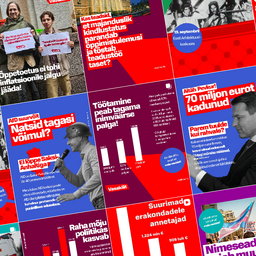
08.10.26 NEWS ... As restrictions on purchasing political advertising on social media will be in place for this year's Riigikogu elections, political parties are putting more effort than before into creating their own posts.
07.10.26 NEWS ... Justice Minister Liisa Pakosta says the long‑stalled gender equality and equal opportunities bill will be passed during the current Riigikogu term, though she has not yet explained the draft's contents or the timeline for its processing.
07.10.26 NEWS ... Ahead of the spring Riigikogu elections, the Ministry of Finance will analyze election promises with the help of artificial intelligence.
07.10.26 NEWS ... According to the latest Institute for Societal Studies and Norstat poll, 23.5 percent of eligible voters support Isamaa, 21.9 percent support the Center Party and 14.7 percent support the Social Democratic Party.
07.10.26 NEWS ... Isamaa, the Estonian Center Party and EKRE want to file a no‑confidence motion against the prime minister Kristen Michal in the coming days, but after several weeks they still have not agreed on the text. The Social Democratic Party does not plan to join the effort.
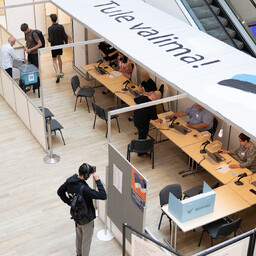
05.10.26 NEWS ... Many political parties have already activated their Riigikogu election campaigns with five months still to go.
05.10.26 NEWS ... Estonia may have to repay €14.5 million to Denmark and the Netherlands from its own budget, after donor money was used in failed advance payments for ammunition for Ukraine, Postimees reported.
03.10.26 NEWS ... The government's decision to slow salary growth for some higher‑ranking state officials over the next three years will save €32.3 million, but judges argue the move may violate the constitution.
02.10.26 NEWS ... Former Tallinn Deputy Mayor Aleksei Jašin is leaving Eesti 200 to join the Social Democrats (SDE).
02.10.26 NEWS ... Center Party chair and former Tallinn Mayor Mihhail Kõlvart has confirmed he will step into the ring for a charity boxing match in November, Postimees reported.
02.10.26 NEWS ... The government wants to boost investments in cybersecurity, including e‑voting, because attacks against Estonia have become massive. Increasingly, they are also carried out with the help of artificial intelligence.
02.10.26 NEWS ... Isamaa chair Urmas Reinsalu says that meaningful policy change in Estonia must wait until after the Riigikogu elections, criticizing the government's handling of state finances and calling economic growth the party's central goal.
02.10.26 NEWS ... Former Narva mayor Katri Raik has criticized an upcoming US-style prayer breakfast in the eastern border town.
01.10.26 OPINION ... Unfortunately, access to medical care has fallen short of residents' health needs and expectations for years. Maris Jesse writes that the Health Insurance Fund board's decision to prioritize cost‑cutting over improving care is shortsighted.
01.10.26 NEWS ... The government disregarded the spirit of the law when it dismissed Defense Ministry Permanent Secretary Kaimo Kuusk, said former state secretary Taimar Peterkop.