Finance minister explains why government rejected fuel excise tax cuts
The Estonian government opposes three opposition-backed bills that would reduce fuel excise taxes. The Ministry of Finance argues the measures would significantly reduce state revenue while having only a limited effect on prices at the pump.
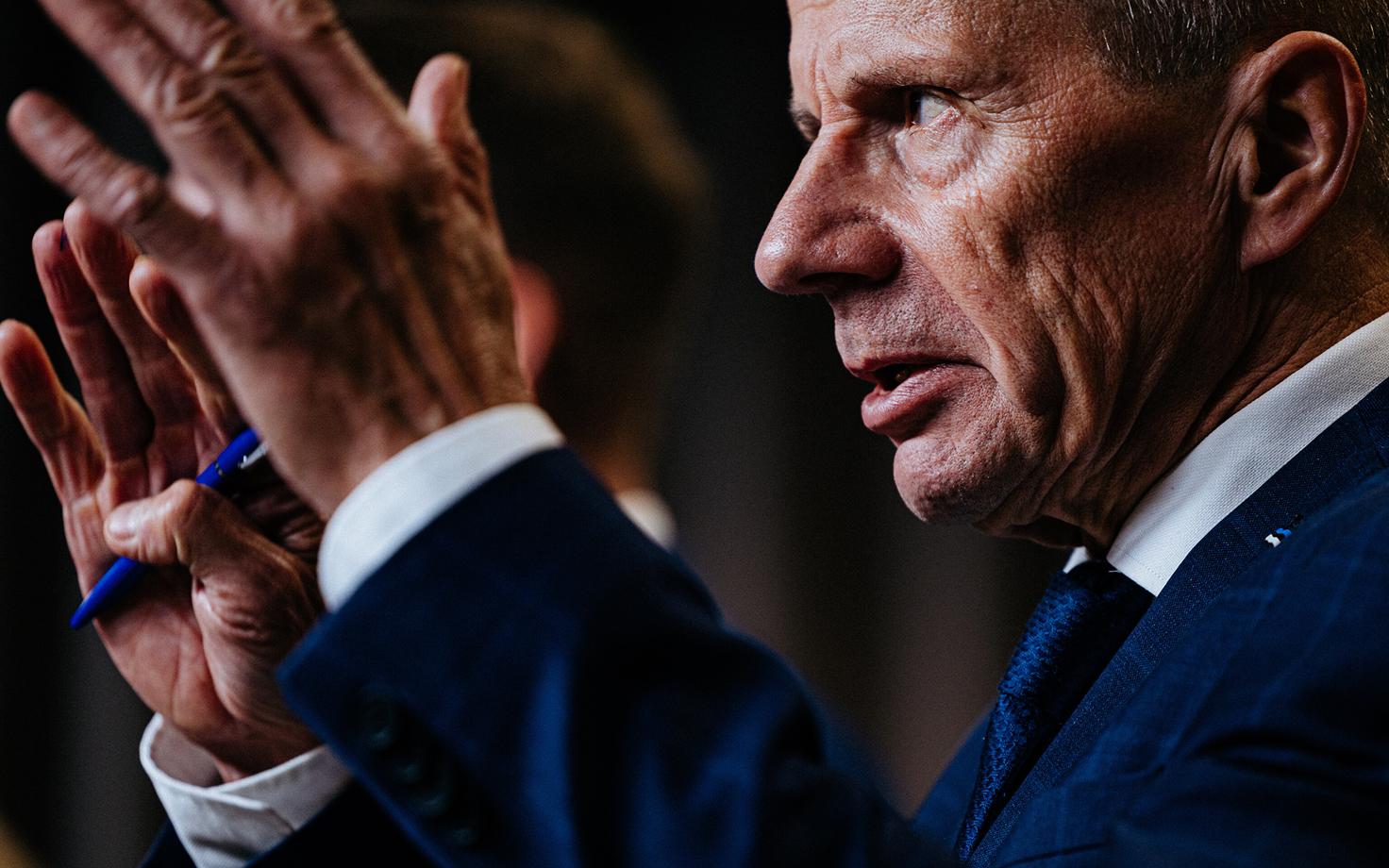
The government decided on October 28 not to support the proposals. Correspondence between Finance Minister Jürgen Ligi (Reform Party), the Riigikogu and the Government Office has now revealed the cabinet's reasoning.
The most extensive proposal, submitted by the EKRE parliamentary group, called for reducing excise taxes on gasoline, diesel, gas and heating fuel to the minimum rates permitted by the European Union. The party also proposed applying a reduced VAT rate of 9 percent to excise-taxed fuels.
The Ministry of Finance estimates that implementing the proposal would reduce state budget revenues by €292.1 million in 2027. If the lower rates remained in effect through the end of 2030, total lost revenue could reach €1.436 billion.
Two other bills, submitted by the Isamaa parliamentary group and by the Social Democratic Party together with several lawmakers, proposed temporarily reducing the diesel excise tax to the EU minimum of €330 per 1,000 liters. The proposed measure would remain in effect for six months.
The Ministry of Finance estimates the change would cost the state budget €51.6 million, including €14.9 million in 2026 and €36.7 million in 2027.
Ministry doubts prices would fall significantly
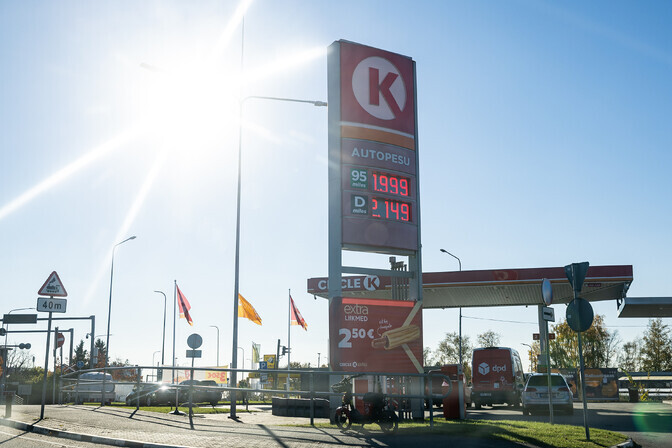
The ministry argues that lowering excise taxes would not substantially reduce fuel prices for consumers. According to its estimates, reducing the diesel excise tax to €330 per 1,000 liters would lower retail prices by roughly €0.085 per liter. About 70 percent of the potential benefit from the tax cut would reach consumers.
The ministry noted that such a reduction would be barely noticeable against the normal price differences between gas stations.
As an example, Ligi points to Latvia, which temporarily reduced excise taxes on diesel and gasoline in 2026. An analysis by Latvia's competition authority found that after the diesel excise tax cut took effect in April, prices fell by an average of €0.0495 per liter, compared with a maximum possible reduction of €0.086. In other words, consumers received about 58 percent of the potential benefit.
European Commission data cited by Ligi showed that by October there had been no significant narrowing of the gap between diesel prices in Estonia and Latvia.
The ministry also argues that higher fuel prices are primarily the result of reduced supply. In its view, tax cuts would not solve that problem, while stimulating demand could further contribute to price increases.
Government favors targeted support
The Ministry of Finance said it would be irresponsible under current circumstances to reduce tax revenue without identifying alternative sources of funding. Additional revenue is needed for areas including national defense and social services.
Instead of broad excise tax cuts, the ministry proposes directing limited budget resources toward targeted support for the most vulnerable households and sectors.
The ministry also identified legal and technical shortcomings in EKRE's bill. It said the proposal does not contain complete legislative wording for the proposed amendments and lacks an impact assessment. The proposal to apply a reduced VAT rate to fuel, with the exception of natural gas, would conflict with European Union directives. Reducing the VAT rate on natural gas alone would result in the loss of about €11 million in tax revenue annually, the ministry estimates.
Appeal by transport entrepreneurs
Also, at the end of September, the Estonian International Road Transport Association, the Fuel Association, the Road Transport Association, the Logistics and Freight Forwarding Association and the Supply Chain Management Association jointly appealed to the Ministry of Finance to temporarily reduce fuel taxes to ease the impact of the energy crisis.
In a response sent to the transport organizations, Ligi said fuel prices have risen this year primarily because of a supply-side problem resulting from the conflict in the Strait of Hormuz.
"We believe it is neither sensible nor possible to solve a supply-side problem by stimulating demand. The price increase is driven by changes in world market prices, which have been significantly larger than the maximum possible excise tax reduction. As a result, the state cannot fully offset the price increase that occurred in 2026," Ligi said.
He noted that excise tax rates have not changed this year because a fuel excise increase planned for May 1 was canceled. For individual consumers, excise taxes have not contributed to higher prices, although value-added tax has increased the price by €0.14.
"That means one-fifth of the price increase comes from VAT, while the remaining 80 percent is due to higher world market prices," the finance minister said.
The associations pointed out that, compared with other EU member states, Estonia ranks among the countries with higher excise tax rates. Among the EU's 27 member states, Estonia ranks eighth in gasoline excise taxes and 10th in diesel excise taxes.
--
Editor: Sergei Mihhailov, Karin Koppel, Argo Ideon


