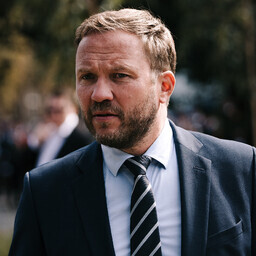
Skip to main menu 27.10.26 NEWS ... Minister of Foreign Affairs Margus Tsahkna (Eesti 200) said he had been briefed on Tuesday's call between the leaders of Norway and Finland and Russia's President Vladimir Putin.
27.10.26 NEWS ... A controversial online casino tax cut needs time to work out, Eesti 200 MP Tanel Tein said.
27.10.26 NEWS ... The promised extra revenue from Estonia's online casino tax cut has not materialized for this year, making next year's culture budget €6–7 million smaller than hoped.
26.10.26 NEWS ... EKRE's parliamentary group wants to reduce the deposit political parties pay to participate in elections from €946 to €220 per candidate and from €118,250 to €27,500 for a full candidate list.
26.10.26 NEWS ... Eesti 200 Chairman Kristina Kallas said the party is preparing for the upcoming national election despite its low ratings and some members saying there is little point.
26.10.26 NEWS ... Specialized care funding in Estonia is so lacking that around 2,000 people in need of assistance are waiting for services.
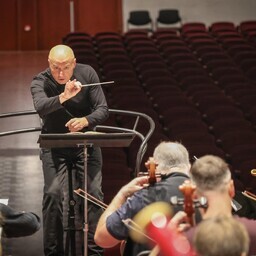
26.10.26 NEWS ... The Estonian Festival Orchestra canceled a concert last week in China after it was revealed that the local symphony orchestra had close ties to Russia.
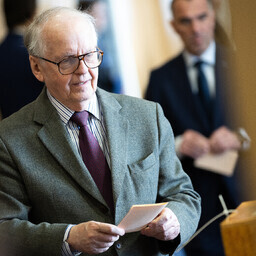
26.10.26 NEWS ... Longtime Center Party member and former television and radio journalist Enn Eesmaa has said he will join the opposition Isamaa Party and will run in the Riigikogu elections next March.
24.10.26 NEWS ... Isamaa leader Urmas Reinsalu said at the party's council meeting in Tallinn that the campaign for Estonia's parliamentary elections has begun and is intensifying.
24.10.26 NEWS ... The Social Democrats' recent rise in the polls may reflect voters growing disillusioned with their preferred parties, while Isamaa's declining support could be linked to a lack of fresh ideas, a political analyst says.
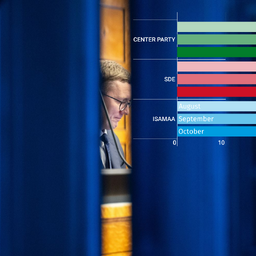
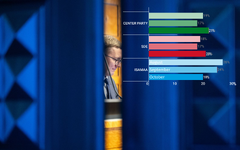
23.10.26 NEWS ... The Center Party and Social Democrats topped Emor's October poll as long-time leader Isamaa slipped, with voters' party loyalties still far from firm, said expert Aivar Voog.
22.10.26 NEWS ... The top official at the Ministry of Foreign Affairs, Jonatan Vseviov, has said he will resign on Thursday to run in next spring's national election for the opposition Social Democratic Party (SDE). He hopes to be the party's prime ministerial candidate.
23.10.26 NEWS ... Jonatan Vseviov has a realistic chance of becoming Estonia's next prime minister, with SDE having played the strongest card of any party recruiting new political talent, ERR foreign policy journalist Mirko Ojakivi said.
23.10.26 NEWS ... Foreign Ministry Secretary General Jonatan Vseviov, who is joining the Social Democratic Party (SDE), says Estonia is capable of achieving more in foreign policy and deserves better.
23.10.26 NEWS ... In October, the Center Party topped Emor's party ratings with 20.6 percent support, followed by the Social Democratic Party with 20.4 percent.
22.10.26 NEWS ... Prime Minister and Reform Party Chairman Kristen Michal said his party would certainly have better cooperation with the Social Democratic Party if it were led by Jonatan Vseviov.
22.10.26 NEWS ... In an interview with ERR, Maris Lauri reflects on the Reform Party's electoral prospects, the challenges of coalition government and the importance of avoiding costly election promises.
22.10.26 NEWS ... Former Minister of Finance and sitting Riigikogu member Maris Lauri (Reform) will start working as President Ülle Madise's economic adviser from November 2.
21.10.26 NEWS ... Justice and Digital Affairs Minister Liisa Pakosta calls for stronger international regulation of AI to protect national sovereignty, smaller languages and cultures.
21.10.26 NEWS ... The Reform Party is aiming for 20 seats after the March elections for a strong team with which to defend the liberal worldview, Prime Minister Kristen Michal said.
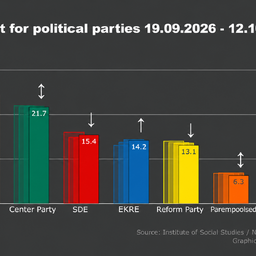
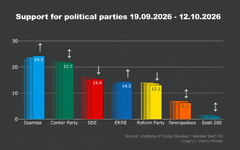
21.10.26 NEWS ... The Reform Party, which saw its support increase in September, has seen a slip of 1.5 percentage points in the latest Norstat poll commissioned by the Ühiskonnauuringute Instituut.
20.10.26 NEWS ... According to agency founder and creative director Joel Volkov, the deciding factor was the Reform Party's values, which can stand up to far-right populist politics.
20.10.26 NEWS ... A vote of no confidence initiated by the opposition in the Reform-Eesti 200 minority government failed on Monday evening.
18.10.26 NEWS ... Eesti 200 decided at its council meeting Sunday not to merge with the non-parliamentary Estonian Greens ahead of the 2027 general elections.
18.10.26 NEWS ... The council of the Eesti 200 party is meeting Sunday, with discussions focusing on the future of the party whose support is well below the electoral threshold ahead of the March 7 Riigikogu elections.
17.10.26 NEWS ... Prime Minister and Reform Party chair Kristen Michal says Estonia's economy is growing twice as fast as the EU average, as Reform pledges a clear course in the 2027 elections.
16.10.26 NEWS ... Eesti 200 MPs Ando Kiviberg and Toomas Uibo say their struggling coalition party should skip next March's Riigikogu elections and instead focus on rebuilding for 2031.
16.10.26 NEWS ... The Interior Ministry plans to redesign Estonian passports and add new security features, with blue covers returning for citizen passports from 2030.
15.10.26 NEWS ... Eesti 200 chair Kristina Kallas is to propose at Sunday's party board meeting that the party run alongside the Greens in the March 2027 Riigikogu elections.
15.10.26 NEWS ... Newly inaugurated Estonian President Ülle Madise met Finnish President Alexander Stubb in Helsinki on Wednesday to discuss European security and Nordic-Baltic cooperation.
15.10.26 NEWS ... The Riigikogu has passed a law allowing young people to vote in European Parliament elections from the age of 16 and stand as candidates from the age of 18, starting in 2029.
14.10.26 NEWS ... The opposition Social Democrats (SDE) will not be joining a no-confidence motion against Prime Minister Kristen Michal's government before a clear plan is unveiled.
14.10.26 NEWS ... Support for Isamaa has risen slightly over the past four weeks, widening its lead over the Center Party, according to the weekly Norstat AS poll.
14.10.26 NEWS ... Center Party Chairman Mihhail Kõlvart has knocked Isamaa leader Urmas Reinsalu off the top spot in the Delfi and Turu-uuringute AS poll on preferred prime minister candidates.
14.10.26 NEWS ... Estonia should publicly express dissatisfaction with US President Donald Trump's remarks and actions if it disagrees with them, the new Estonian president's security adviser said.
14.10.26 NEWS ... President Ülle Madise declined to comment directly on the US-Russia diesel deal, saying she lacks the facts, but added that anything which strengthens Russia is bad.
14.10.26 NEWS ... Former European commissioner and Center Party veteran Kadri Simson is returning to Estonian politics, this time as a member of the Social Democratic Party (SDE).
14.10.26 NEWS ... Center Party, Isamaa and EKRE have submitted a motion of no confidence in Prime Minister Kristen Michal's government, accusing it of undermining public trust and failing to address Estonia's challenges.
13.10.26 NEWS ... Opposition party Isamaa collected by far the most donations among parliamentary parties in the third quarter of 2026 (Q3 2026), taking in €229,301.
13.10.26 NEWS ... Estonian politicians say newly inaugurated President Ülle Madise can help rebuild trust and unite the country after years of crises and growing divisions.
12.10.26 NEWS ... Former justice chancellor Ülle Madise was sworn in as the next president of Estonia on Monday, taking the oath of office in the Session Hall of the Riigikogu.
12.10.26 NEWS ... As Ülle Madise takes office as Estonia's next president, politicians are debating changes to the presidency itself, from its powers to how the head of state is elected.
12.10.26 NEWS ... President Alar Karis spent his final week as head of state at Kadriorg. Journalists say foreign policy was his weak point.
10.10.26 OPINION ... Can Estonia's current minority government make it to the finish line or are we heading toward early elections, asks Mari‑Liis Jakobson.
10.10.26 OPINION ... We forget two factors when talking about the growth of the debt burden — factors that affect the whole picture: economic growth and price growth, writes Raul Eamets.
10.10.26 NEWS ... The opposition Center Party has risen to the top of Estonia's party ratings with 23 percent support, overtaking Isamaa, according to a recent poll.
09.10.26 NEWS ... With five months to go until the elections, parties are still unsure how they may legally run political ads this year. A new European Union rule meant to increase funding transparency has also created confusion and added bureaucracy.
09.10.26 NEWS ... The government says it has no plans to cut fuel excise despite a proposal from the Chamber of Commerce and Industry to do so, Climate Minister Erkki Keldo (Reform) said.
08.10.26 NEWS ... Coalition parties say the budget deficit is being reduced, while the opposition argues that the governing parties are borrowing money to deliver on their promises.
08.10.26 NEWS ... The Social Democrats are prepared to vote in favor of the state budget if the coalition backs their proposed amendments, worth up to €100 million, without negotiations.