Expert: Ukrainian security and Russia's ambitions rule out U.S. deal
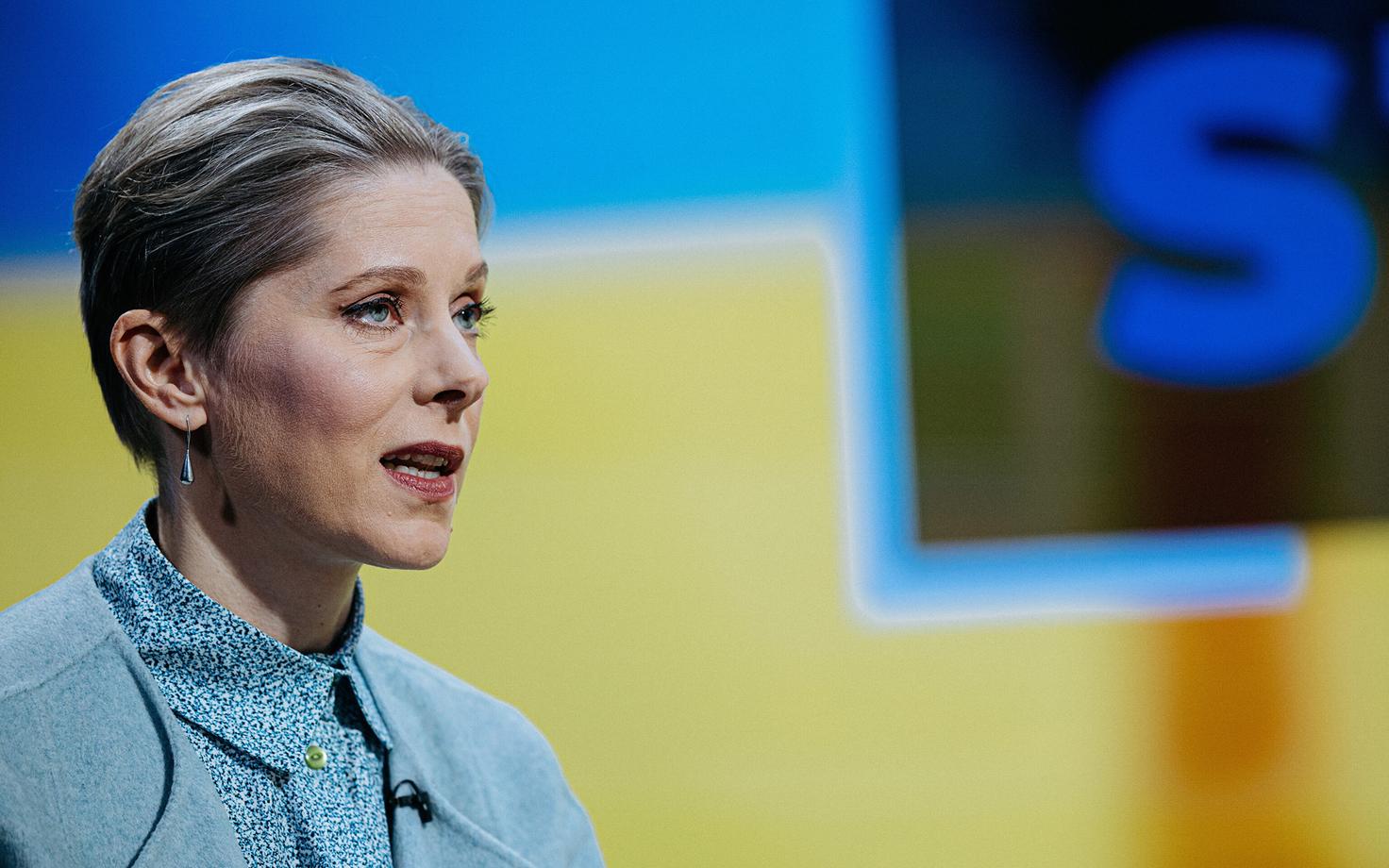
President Donald Trump's push for a sweeping security agreement with Russia covering Ukraine and Europe is unlikely to make peace negotiations easier or faster, ICDS Senior Research Fellow Liis Mure tells ERR.
What should we make of the grand deal promised by President Donald Trump, which would concern both Ukraine and Europe as a whole?
It certainly reflects Russia's thinking on European security, as we may recall from December 2021, before Russia invaded Ukraine. Moscow was making similar demands back then: a complete overhaul of Europe's security architecture, a return of NATO to its 1997 borders and so on.
However, it is also worth noting that all the mechanisms American negotiators are now proposing for Europe — such as various dialogue formats, confidence-building measures and arms control measures — have actually existed in Europe before, for example within the framework of the OSCE. Russia even had a dialogue format with NATO, which was used quite regularly at certain times. There were also various arms control and confidence-building agreements, inspections under the Vienna Document and the Treaty on Conventional Armed Forces in Europe. Russia itself has either altered, rendered completely ineffective or withdrawn from almost all these agreements.
In that sense, it is difficult to see how anything could be established that would, on the one hand, meet the requirements the Americans themselves have put forward — namely, respect for the sovereignty and territorial integrity of all countries and their right to make their own political decisions — while, on the other hand, accommodating Russia's wishes and addressing its so-called security concerns. This is a particularly significant issue when it comes to Ukraine, because it is clear that Russia has not abandoned its previous objectives there.
And perhaps the third aspect is how an agreement between the United States and Russia on Europe's security architecture could even be possible without Europeans taking part. We have now seen the French foreign minister say that Europeans will be represented in some capacity at next week's talks in Abu Dhabi.
But in the current situation, with Russia conducting gray-zone attacks against Europe virtually every day, it is very difficult to see sufficient common ground for any progress on these issues at present. And if President Trump believes that expanding the scope of negotiations from Ukraine to the whole of Europe will make reaching an agreement easier or faster, I fear that is probably a mistaken assumption.
It is very difficult to imagine how such an agreement could come about if its terms are unacceptable to Ukraine and Europe.
Yes. There are several areas where it is difficult to imagine a compromise or common position. Take the issue of security guarantees, for example. Ukraine has made it clear that it wants certain European military units stationed on its territory, that it is not prepared to reduce the size of its armed forces below a certain level and that it is not prepared to give up capabilities such as long-range strikes. Russia, meanwhile, wants all of those things.
So it is difficult to see how a solution could be reached in which Ukraine feels its security is sufficiently guaranteed while Russia believes its ambitions in Ukraine have also been satisfied.
Let's talk a little about the results of the U.S. midterm elections and their potential impact on this war. Donald Trump suffered a painful defeat, but what does that mean? After all, the president still has a very significant role in foreign policy. And although the Financial Times, for example, has reported that Democrats are already rushing to prepare a $15 billion aid package and want to tighten sanctions, what opportunities do they actually have to do so under the American political system?
First, it is worth remembering that the current Congress will remain in office until the beginning of next year. Republicans still control Congress at present. That said, congressional Republicans are generally fairly supportive of Ukraine. Previously, they have tended to follow the president's and the administration's lead and have been reluctant to allocate much additional aid to Ukraine. But following an electoral defeat of this magnitude, it is possible that they may become somewhat more willing to challenge the White House.
Of course, it is true that the president has very extensive powers in foreign policy and it is extremely difficult for Congress to fundamentally change that direction. Lawmakers may be able to delay certain things or create some obstacles, but broadly speaking, the president can continue doing exactly what he wants.
As for sanctions specifically, there has been talk that the president might want to lift sanctions on the Russian Direct Investment Fund and release some of the frozen funds. Here again, it is not entirely clear whether he has the authority to do so. Congress has already placed certain restrictions on the president's ability to take such steps through legislation that establishes conditions that must be met, including that peace must have been achieved in Ukraine and that Congress must be notified 30 days in advance.
However, we have also seen this administration frequently attempt to bypass Congress, in some cases even disregarding the law. All of this can, of course, be challenged in court, but those legal proceedings take time. So Congress does not have many direct ways to block the administration or force it to take particular actions.
If Democrats take control of Congress in January, they will, of course, be able to pass legislation and allocate precisely the kind of financial assistance to Ukraine that they want. But all legislation in the United States still requires the president's signature. Yes, Congress can override a presidential veto, but that requires a two-thirds majority in both chambers.
Looking at the numbers now, Democrats do not have enough votes to do that on their own. It would mean that a significant number of congressional Republicans would have to vote alongside Democrats. Whether they would be willing to oppose a president elected from their own party in that way is a major question.
How important is the Ukraine issue to Democrats and to those Republicans who support Ukraine? If they end up negotiating with the president over various issues, will Ukraine be near the top of their priorities or further down the list, where they might be more willing to compromise?
I think congressional Republicans have been quite frustrated by the way President Trump has tried to conduct the Ukraine peace process. They clearly have not liked the agreements that the administration has sought to reach with Russia or has already reached, for example on purchases of Russian diesel and on lifting or postponing certain sanctions that Congress had approved.
So I think this is important to them. And indeed, leading Democratic senators have already indicated that initiating legislation to provide aid to Ukraine will be one of their priorities if they take control of Congress.
But we should not forget that Democrats must now demonstrate to their voters, first and foremost, that they will hold Trump and those close to him accountable before Congress. Various investigations will be launched into a range of issues, from how immigration policy has been implemented to the Trump family's business ties and how certain profits have been made.
Domestic politics will probably remain the Democrats' primary focus, at least initially, but I think they will still have the energy to put Ukraine back on the agenda.
Those investigations could also target Steve Witkoff and Jared Kushner, Trump's son-in-law, who are serving as special envoys in the Ukraine negotiations. Could that have an impact on the peace talks?
Unfortunately, I think it could actually have a negative impact in some respects.
During Trump's first term, investigations were conducted into possible Russian interference in the presidential election, including the support and connections that Russian representatives had with Trump's campaign team. Even then, this generated considerable anger toward Ukraine and a sense of victimhood, with Trump feeling that he was being persecuted by such accusations.
I fear that could happen again. Certain people close to the president will undoubtedly come under congressional investigation and Jared Kushner is likely to be one of them. These investigations will not concern only Russia and Ukraine; Middle Eastern issues are also involved. So it will not be possible to separate this from the broader peace process and relations with Europe and Ukraine.
And perhaps Donald Trump will start taking out his frustrations through foreign policy?
During his second term, Trump has already been more focused on foreign policy. My interpretation is that he wants to emulate great American leaders and presidents such as Ronald Reagan, who achieved very significant arms control agreements with the Soviet Union. Trump wants to accomplish something similar.
I think he will remain very active internationally and will try to implement as much of his agenda as possible, particularly over the next few months, while Republicans still control Congress.
Peace talks are scheduled to take place in Abu Dhabi next week. What can we expect from them and what role might Europeans play? There was renewed discussion this week about how Europe should be represented at the talks.
Yes, indeed, those talks in Abu Dhabi are scheduled for next week. Let us recall that the previous trilateral meetings of this kind took place in January and February, before the United States launched its military campaign in Iran. So there has been quite a long break in this format.
Very ambitious proposals have now been put on the table. But if we look at what the Ukrainians themselves are saying and what their expectations are, they are much more modest than what the American negotiators are describing.
The Ukrainians' objective is more to try to reach a limited ceasefire, perhaps an agreement to refrain from attacking certain types of facilities on either side. Previous progress has also tended to come on technical and military issues, whether discussions of security guarantees or prisoner-of-war exchanges.
For that reason, I certainly would not expect any major headline-making breakthroughs next week. Rather, this is another attempt to get a major process underway. There are still very few indications that Russia is prepared to abandon certain demands in a way that would make any agreement possible.
As for European participation in these talks, there is still no clear understanding or agreement today about who should represent Europe at such a meeting.
Who should that be?
Fortunately, I am not the one who has to make that decision. But it is clear that for countries on NATO's eastern flank and the European Union's eastern flank, such as Estonia, it is extremely important that our voices are heard.
Everything being discussed there concerns us, particularly if we are talking about the broader European security architecture or restrictions on NATO activities in countries along its borders. Naturally, we would all want to be at that table, which is obviously not possible.
The countries will have to reach an agreement among themselves, but as we can see, that has simply not proved possible so far.
And, in fact, Europe more broadly still lacks confidence in Russia's sincerity in these talks, because we have not seen any signals of goodwill toward Europe suggesting that the Russians are genuinely open to de-escalation at all.
--
Editor: Marcus Turovski, Aleksander Krjukov
Source: "Ukraina stuudio"


