In Search of Jackboots (20)

By Scott Diel
Published: 27.09.2010 09:35

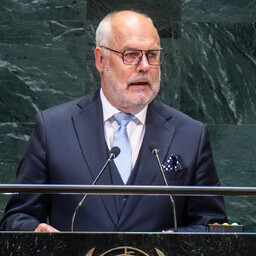
Photo: Scanpix

See Also

Integration: Pursuing an explanation for Estonia’s chronic negative image in the western press.

The Exam

On a snowy Sunday in February I sat in a classroom in Pae Gymnasium. Motivated by a desire to vote in local elections, I had registered for Estonia’s B1 language exam. It’s a bit unjust, I’d always thought, that a European citizen, who speaks not a word of Estonian and understands not a single issue, is entitled to vote in local elections. Yet an American, who speaks the language more or less fluently and legally resides in the country, must pass a language exam. But the law is the law, and so I took the exam to prove my proficiency in the Estonian language. 

 
And so, in my assigned classroom, I sat at a student’s desk surrounded by mostly native Russian speakers, as two proctors explained the rules of the exam in deliberate Estonian. Instructions given, I was ordered to remove my bag from the desktop, silence was requested, and the first part of the exam was begun.
 
Only a few minutes into the exam, the student in front of me turned 180 degrees in his chair to ask me in a conversational volume for assistance in answering an exam question. A bit struck by his audacity, I suggested in the same volume that he ask the proctor. If the proctors noticed us, they gave no sign. A few minutes later, the student on my right produced crib notes which he shielded from view with his hand. What was he cribbing from I wondered, since the exam required you to write a letter to a friend describing what you did on New Year’s Eve? How specific could his crib notes possibly have been?
 
Many of the test takers simply stared into space, and as I glanced across the room I could see that many of their exam papers contained not a single line of text. A few had managed a couple of sentences, but I saw few which would qualify as a letter. I wondered if both behaviors were normal: for students to be completely unprepared and for proctors to pretend there was no cheating going on. 
 
My experience with teachers and exam proctors is that neither are fools, and they know very well what happens in their classrooms. Could two proctors have missed the cheating? Perhaps catching a cheater caused more trouble than it was worth? Or perhaps de facto Estonian integration policy was such that it wasn’t politically correct to catch them?
 
Erasing Russian
In June 2010, I read the New York Times’ Moscow Bureau Chief Clifford Levy’s article, “Estonia Raises Its Pencils to Erase Russian,” where Levy described language inspectors who would “saunter from classroom to classroom…engaging in seemingly trivial chit chat…” Levy termed Tallinn’s Pae Gymnasium a “linguistic battleground” and concerning the numbers of Estonia’s Russian-speaking minority, wrote that the “government seems bent on employing the schools to lower that figure.” The article seemed to pass unnoticed in Estonia, except for one Postimees columnist who wondered aloud whether Levy really believed Estonia’s government was out to change the mother tongue of around 400,000 Russians.
 
I had also seen Amnesty International’s February 2007 press release titled “Language Police Gets More Power to Harass,” where Estonia’s Language Inspectorate was called “repressive and punitive in nature.” The press release featured a letter from a picked-on taxi driver with three children, a mortgage, and an alcoholic husband. 
 
An American National Public Radio broadcast in August 2010 featured journalist David Greene calling Estonia a “feisty little country,” where post 1991, the Estonians, in the words of a Russian, “had the land, they had the money, …Russians had nothing…” An I Hate Russians t-shirt was cited as evidence, and a man in Narva was located who “desperately wants to move to Russia.” NPR noted that “language inspectors have the power to roam schools” and quoted President Toomas Hendrik Ilves: “I don’t see what people are complaining about.”
 
The stories were surely someone’s truth, though they were rather one-sided. The journalists did not interview a single gainfully-employed, successfully-integrated, Estonian-speaking Russian who was pleased to be an Estonian citizen, or at least pleased to be part of the EU. Given the rift between the two cultures, it is possible this sort of satisfied ethnic Russian would not eagerly present himself to western journalists. But they did exist. I knew plenty of them personally.
 
The New York Times and National Public Radio were not trashy tabloids, but some of the finest journalistic institutions the United States has produced. Could the experiences of these journalists, I wondered, be so truly different from the small picture I’d seen? Where were the jackboot-wearing language soldiers bent on erasing Russian? From what I’d seen in my exam experience, the soldiers wore bedroom slippers. 
 
I set out to find the jackboots.
 
A Return to Pae
I decided to retrace the path of Clifford Levy, and so I returned to Pae Gymnasium, this time not as a test-taker but a journalist, where I met with Izabella Riitsaar, the school’s director. 
 
I asked her if language inspectors were free to roam the halls of her school. She told me they always announced their visits a full month in advance. And, she added, the Language Inspectorate did even more. “They listed the questions they would ask, both verbal and written.” And when they arrived, she said, they did not deviate from the list.
 
To prepare for the inspectors’ visit, Riitsaar organized study sessions for her teachers lasting from one hour to an hour-and-a-half per day, this in addition to teachers’ regular schedules and without any state funding. Riitsaar didn’t appear to have any sympathy for teachers who failed under those circumstances. She told me that in ten years’ time, she has only had to let one teacher go for not measuring up to language requirements. 
 
Riitsaar acknowledged the exam isn’t easy for some. Many of her teachers, especially those over 50, don’t use the Estonian language on a daily basis. And schoolteachers are, by nature, perfectionists. They don’t like to make even small mistakes. 
 
Riitsaar told me she did not consider the Language Inspectorate as a punishment organization, and it seemed to me her relationship with them was without antagonism. I was curious how her school and teachers had ended up cast as part of a “linguistic battleground.”
 
“How did Mr. Levy write the article he did?” I asked. 
 
“I’m not sure,” she shrugged. “I had the same conversation with him that I’m having with you.”
 
The Orphanage
It wasn’t on Clifford Levy’s list, but I went to meet Tiit Kruusalu, director of personnel for Tallinn’s Children Home, an institution whose six units and 200 employees offer services for orphans, children with disabilities, and infants. 
 
Kruusalu, a former professional soldier, opened an elaborate spreadsheet (employee names were masked), to illustrate that as of January 1, 2010, 71 staffers, roughly 30 percent of his workforce, were in a high risk group for not meeting the language requirements. He browsed forward to June 2010, to show how over time employees had satisfied the language requirements and the risk group was reduced to 43. 
 
“But how many of those 43 do you estimate will still be here in a year?” I interrupted to ask. 
 
“I don’t have the moral right to answer that question,” he replied. 
 
On July 1, 2008, the Estonian government prescribed in Decree 105, how to meet the language requirements. Several months later, Kruusalu went on the road with a slideshow to all his 200 workers to explain the law’s requirements and offer a plan for fulfilling them. Although the slides were in the Estonian language, they were designed for his target audience: one slide humorously depicted the language inspector as a witch on a broom (“When the topic is unpleasant, it helps to garnish it,” said Kruusalu). To eliminate any chance of being misunderstood, Kruusalu delivered his presentation in the Russian language.
 
In 2009, when 22 of the Children’s Home workers elected to meet with inspectors (the inspection was coordinated in cooperation with the Language Inspectorate), none of them passed. The next visit is scheduled for autumn 2010.
 
Although Kruusalu was unwilling to speculate, I gathered from his remarks that some of the 43 remaining in the risk group would surely have to eventually go. “There are some people who still believe that the Estonian Republic is only temporary,” he said, indicating that some simply refuse to learn the Estonian language. 
 
Kruusalu says the Language Inspectorate has been flexible to the needs of the Children’s Home. “They’re aware we have a plan, and they’re aware we’re working toward it.” Workers in positions which require the successful completion of the B2 exam but have completed the lesser B1 exam, have not been let go. “B1, that’s something,” said Kruusalu. “Step by step.”
 
Kruusalu has a tough balancing act. He must meet the law’s requirements, but at the same time maintain a stable work environment which does not negatively affect they children they serve. 
 
“We have to fulfill the law,” said Kruusalu, who several times told me his main concern was being able to face himself in the mirror. “And we will do it as humanely as possible.” 
 
The Inspectorate
There was nothing left but to meet the chief broom rider himself, Ilmar Tomusk, Director of the Language Inspectorate. The inspectorate occupies a suite of cheaply-renovated offices on the third floor of a building across from the National Library. A visitor must be buzzed both in and out. 
 
Tomusk, who holds a PhD in Public Administration, and is the author of two volumes on language and politics, has served 15 years in his current capacity. He supervises a staff of 18, of whom 12 work as inspectors. 
 
I asked him about the western media’s consistent negative portrayal of his inspectors and his institution. “The question is predisposition,” he said, and he began to dismiss the myths. 
 
Inspectors do not “roam” anywhere. In the public sector, they don’t appear without notice. In the private sector, they generally (with the exception of taxi drivers) do not make surprise inspections, but rather follow up on complaints made by citizens. Those, he admits, are frequently without basis. “Perhaps someone didn’t like the checker’s accent at the supermarket.” 
 
An inspector’s job is to inspect: they lack the power to fire anyone. They can, however, order a fine, though sanctions are rare and the fines often less than a parking ticket in the city of Tallinn. In a single year, Tomusk said, 3,000 people are inspected, and 7 to 10 percent of them receive a fine. 
 
The language law is not applied on the basis of ethnicity, rather on the basis of education. Estonians who received their education in Russian-curriculum schools are also required to prove their proficiency.
 
Tomusk views his organization not as “repressive and punitive in nature” as Amnesty International characterized it, but rather sees it as a participant in the integration process.
 
Theories
But if the language cops are not jackboot-wearing sadists who find joy in exacting punishment, if the state is not bent on the obliteration of the Russian language, where does the west’s predisposition come from? 
 
“There are so-called Russian human rights organizations that are active in Estonia,” said Tomusk. “These are very active and they have some attorneys who consider themselves human rights experts. These organizations interact regularly with the Russian-language press in Estonia, as well as with Amnesty International.”
 
The local Russian-language press is another source of friction. Yana Toom, currently Vice-Mayor of the City of Tallinn, once took the Language Inspectorate to task in her capacity as editor in chief of the city-financed and politically-partisan Russian-language weekly, Stolitsa. In her article, Toom argued inspectors had no legal basis for holding a “conversation” with those whose language they were evaluating and advocated subjects refuse to answer questions. In a letter to Toom, Tomusk disputed her case, line by line, and established his team’s right to use conversation as a tool to judge a person’s competency in a language. 
 
Concerning other theories, some I talked to cited Moscow’s substantial propaganda budgets and highly organized public relations efforts to swing western opinion its way. Some mentioned western journalists covering Estonia from a base in Moscow being naturally influenced by a Russian point of view. Some considered the reason to be easily-duped foreigners and lazy journalism.
 
Root Causes
In interviews, I was offered repeated examples of the Language Inspectorate’s willingness to overlook the letter of the law (for a period of years) in order to satisfy the spirit – demonstration of a belief that work in process is work indeed, toward the goal of nation which can function in one national language. 
 
Whatever the root cause or causes, Estonia doesn’t appear organized or willing to defend its point of view in the western press. The nation, from observing discussions in the Estonian-language media, seems rather disinterested. Estonians seem to feel the law is the law and, they seem to say, if you don’t like it, leave. The fairness of Estonian language and citizenship laws aside, it seems Estonia has a case to be made that the language law’s enforcement is humane.
 
The nation may have survived a cyberattack and simultaneously improved its image in the eyes of the west, but in terms of integration it seems capable only of creating a case study in public relations disasters. When journalists from the New York Times and NPR come knocking on your door and come away with absolutely nothing positive to say, perhaps it should be cause for worry. 
 
 
Scott Diel passed the B1 language examination last February. He is a faithful reader of the New York Times and a regular listener of NPR.

Comments

For adding comments,enter the ERR website with your user name and password , or use the form below to comment without logging in.


Guidelines for commenting can be found here.

Comments (20)

  • pluss

    27.09.2010 12:57

    This article raises some very interesting and important points. I am to a degree aware of the bad press Estonia is getting in relation to the integration policies, and it does worry me. I do wish more was done to combat the Russian propaganda outside Estonia. However, I'm not exactly sure how that should be done. Would resorting to counter-propaganda really be the solution? Or should we simply hope that journalists writing on these topics are ethical enough to thoroughly research both sides of the story? There is no doubt the Russian integration programme in Estonia has its weak points. I personally only have respect for those Russians living in Estonia who speak the language (or at least try to); in fact I am quite proud of them and at the same time rather sad that I don't happen to know any personally. However, I'm not entirely sure what anyone could do about (mostly) the older generation of Russians who, despite having been given the option to learn Estonian, completely refuse to speak it (even if they have learnt it), as they believe it is their right to manage with only Russian language in Estonia, or that, as the author also mentions in his article, Estonia is only temporary and the glorious Soviet times will return (and why wouldn't they want that, their lives were much cosier back when Estonia was occupied by the Russians). So instead of putting those Russians (who are not even remotely interested in being integrated) into situations where they would need to use the Estonian language, our service sector is strongly geared towards employing only those who, alongside Estonian and usually also English or another European language, speak Russian well. Which, I suppose, is fair enough, but doesn't do much to endear the Russian population in Estonia to the younger generations of Estonians who are forced to learn Russian if they are interested in working in the service sector. Not to even mention the fact that there are plenty of services that can be accessed only in Russian, regardless of the national language being Estonian.

  • Charles Bates

    27.09.2010 13:51

    Pluss wrote, "Or should we simply hope that journalists writing on these topics are ethical enough to thoroughly research both sides of the story?" Estonians have a wonderful expression in this regard: "Lootus on lollide lohutus." Hope is the comfort of the stupid, or something approximating that.

  • New Yorker

    29.09.2010 19:27

    Israel, another tiny democracy in a dangerous neighborhood has similarly neglected PR in the belief that they don't need it because they're not doing anything wrong. And behold the result - they are constantly hammered by the NYTimes, NPR etc. & losing the war in the worldwide media war. PR is not a luxury, Estonia. Saving money on PR is a false economy. Please wake up!

  • Sam

    29.09.2010 19:34

    I am not disagreeing with Scott Diel that Estonians could be more concerned with what is being written about them on the topic of the language or citizenship laws, however one also needs to take into account the generally left of center viewpoints of both the NYT and NPR. They tend to write about Russia wearing rose (or should I say pink) colored glasses, so regardless of who these reporters may have spoken with they probably already had a viewpoint going into this and were going to find just enough evidence or justification required to uphold that viewpoint for their story. In general i find that articles in western media about Estonia are usually well-balanced and overall positive.

  • Perplexed

    29.09.2010 21:37

    What??????? "Estonia is only temporary and the Glorious Soviet time will return" WHAT???? "pluss" you sound like a Russian Why don't you go back, if the "Glorious Soviet times" were so great, why did you leave? Simply put, you learn the language of the country you want to stay in, be it Italy, Portugal, Germany or Estonia. and if you do not like it, leave Have you heard of the saying "Love it or leave it"

  • avatar

    Epiphany

    30.09.2010 11:40

    Perplexed: You might want to re-read pluss' comment. Pluss was referring to the article, and the belief of older Russians that the soviet union will return. Anyway. What I came here to write is that as an Englishman I find it unfair that a lot of employers in the service sector ask for employees who can speak Estonian AND Russian. I am trying my best to learn Estonian but there is no way in hell that I'm going to try to learn Russian too, which sets me behind a lot of other people looking for work.

  • pluss

    30.09.2010 12:18

    'Perplexed': You took that bit about the glorious Soviet times etc. completely out of the context; I would suggest reading the whole sentence by me again. I do apologise for making that sentence too long and therefore obviously confusing. However, I did not realise it could be taken in such a way as your response conveys. I was merely referring to the quote by Tiit Kruusalu in the article above - "There are some people who still believe that the Estonian Republic is only temporary,” he said, indicating that some simply refuse to learn the Estonian language." - which I agree with. I am Estonian and in no way do I believe that Soviet times were glorious or that the Estonian Republic is a temporary phenomenon. Furthemore, I completely agree with you that one should learn the language of the country one lives in, and if one does nothing else but complain about everything in that country (to where they themselves willingly moved), one should leave. I do wish those Russians who do not really want to live in Estonia but in the Soviet Union, would leave, as I do not see how they benefit our society here. Sadly, wishful thinking is one thing, the realistic side of things completely another. We may dislike those Russians living here who hate us and our country, but they are a part of our society. And the general vibe in Estonia to completely disregard them is naive at best. I am not a supporter of Keskerakond, but I do believe that their policy to also address the Russian part of our society is far more forward thinking than burying our head in the sand and trying to forget one third of our population is Russian. 'Charles Bates': So true. Mere hoping does not actually get things done, and it is highly unlikely that without a push of some kind journalists would actually start being objective. But isn't this the story of Estonia, hoping (and only hoping) for better things like fairer politics and better life standards? I have never perceived Estonia or Estonians as aggressive; I think it works against us a lot of the time.

  • Valiseestlane Peeter

    30.09.2010 19:46

    I think it's very apropriate to know the language, spelling and grammar of whatever country you are LIVING in. I wish that the same could be done here in the United States. My Estonian Born Parents, came to the USA in November, 1949 knowing how to speak English already (besides fluency in German, & Russain as well) They assimilated and took pride in learning English better & better. Here, in the US, the Spanish Speaking peoples expect the US citizens who have descended mostly from Europeans who have assimilated and their childfren and childrens children and so on, to cater to them. Within 40 years, I predict that English in the US will be secondary to Spanish. I applaud Estonia's encouragement of use of the Estonian Language in Estonia. I wish the US would implement such measueres encouraging English usage. Do you think anyone emigrating to Japan would have any success in convincing the Japanese government or culture to cater to them? Not Likely.

  • Seymour

    01.10.2010 22:20

    New Yorker writes: "Israel, another tiny democracy in a dangerous neighborhood has similarly neglected PR in the belief that they don't need it because they're not doing anything wrong. And behold the result - they are constantly hammered by the NYTimes, NPR etc. & losing the war in the worldwide media war." Not neglecting PR out of the belief that one is right does not mean that one is right. The NYT may very well be hammering Israel because Israel is, in fact, in the wrong.

  • Juss

    03.10.2010 00:26

    What Valiseestlane Peeter writes is not true. People from a Hispanic background in the US learn English, their children also, they become US citizens, respect the law, pay their taxes and do not believe in a dismantling of the US. Have you ever heard of the names of Eva Longoria, Sonia Sotomayor, Carlos Gutierrez, Alex Rodriguez (A-Rod), Gloria Estefan, Ricardo Sanchez, Antonia Novello, Carlos Santana, Jerry Garcia, Joan Baez, Edward James Olmos, Andy Garcia, etc., etc. All are or were well-integrated and active contributors to American society and culture.

  • SoberPedestrian

    06.10.2010 10:31

    Hello. Pluss and Epiphany, we meet again. Well,you guys always raise good points. I am the other English guy on here. Ever since coming to Estonia, the one thing i could see very quickly without anyone pointing it out, or telling me about, was the Great Divide between Russians and Estonians. In fairness, to go back to the beginning,for a moment. If you were a tiny little, innocent country that couldn't really inflict much harm on anyone, let alone a country that nearly occupies half the globe, you would also be Bitter for a long time after being invaded and occupied by not just Russia, but all the other countries that also had their turn, and there are many. The truth is that Estonia just wants to be back to Estonia, and no harm there.But Russians,just want to continue to try to dominate the world and that is their nature, silly really, as you would think their country was big enough already. I am just one of those people that is tired of hearing all the complaints from Russians in Estonia about how hard their life here is and their language is becoming obselete, and their kids are not happy, and how Estonians are always trying to block their paths for success. It really should come down to:If you dont like it, and dont want to learn the language, just go back to Russia, and see if it really is the land of Greatness, but i think you would be back to Estonia on the very next Train. Intergration is only possible through communication! if you can't, or wont speak to each other in a chosen language, no one will get very far. But this problem of intergration is all over the world. In the UK, we see Pakistani communities, Chinese, African, Jewish, Polish and a whole host of others living in their close knit groups and you see them almost keeping the British people out or apart from themselves ,and not forgetting that the UK is also a little Island. And lastly,the UK still has a Racism Issue against most Ethnic Communities,even though when asked,will almost always deny this. Not to mention the recent TV program,for discovery for "Ross Kemp ,on gangs, and the recent violent deaths of innocent ethnic minorities living in Russia, and because of the colour of their skin,were publicly beated to death in the streets,while the police turned a blind eye. Lets hope this attitude does not cross the border.Or maybe,it already has?

  • Estonian

    07.10.2010 00:07

    to SoberPedestrian I am an Estonian and but I feel exactly the same. Just tired of constant whining and complaining. In my opinion Russia must take these whiners back. How jewish people emigrated to Israel in 70ies? (They lived centuries in Eastern Europe and Russia). Why don't Russians now move back to their historical homeland. They will get everything in Russia they haven`t had in Estonia: all rights, Russian language only, a good education, high culture, no discrimination.

  • Asehpe

    07.10.2010 23:44

    Even though in principle I agree that those who complain (or don't want to qualify for the naturlization exam) are wrong in doing so (and often affect a condescending attitude to boot), I do have to say, in their defence, that many of them were born in Estonia, and it is a bit shocking to be told one day that you are citizen of the country where you live, and then the next one that you aren't, and that now you need to learn a new language -- without you ever having done anything for this change of situation to come about. I agree that Russians need to integrate to live in Estonia, which implies learinng the language. But I can sympathize with the feelings of Russians who were suddenly told they were no longer citizens, despite having been born there -- as if their lives, their existence were worthless. It's not a nice thing to hear.

  • Estonian

    09.10.2010 10:35

    Yes it´s a shock, but.... Why they (Russian so-called minority) don`t understand shock of Estonians who in year 1940 found themselves in a new country and needed to study a new language? We managed somehow, you know. Citizenship-we all lost our Soviet Union citizenship in 1991. We all needed to apply for new Estonian citizenship, I find it insulting, too, by they way, beacuse I needed to prove my parents were born in Estonia. Studying a new language? How was this new, when they were born in Estonia? I understand that we were some sort of strange similar to Germans aborigines for Russians, but anyway...you even study language of aborigines sometimes. Suddenly not citizens--we all: estonians, russians, jews were not citizens any more beacuse this state collapsed. All these russians are citizens of Russia, Belorussia, Ukraine. The fact that they don't have estonain citizenship means that they haven`t ties in Estonia. I think this is the trend in the world now. Oh these poor Russians. Especially ridiculous was a Daily Mail article about Sevastopol. But the suffering of East Europe in the hands of Russian/Soviet Empire--this is forgotten and hypocritical "west" used it only during Cold War. This my opinion. And sorry about the mistakes.

  • knut albers

    22.10.2010 13:19

    "Furthemore, I completely agree with you that one should learn the language(...) and if one does nothing else but complain(...) one should leave"; "In my opinion Russia must take these whiners back"; "Why don't Russians now move back to their historical homeland.." Do I read here anticonstitutional statements? And I thought we live here in a free country.

 1 2