Ex-justice chancellor: Orthodox church has slim chance in European court

Ex-justice chancellor Allar Jõks says the Estonian Christian Orthodox Church and Pühtitsa Convent have little chance in European court after filing a complaint prematurely.
The Estonian Christian Orthodox Church (EKÕK) and Pühtitsa Convent have challenged amendments to Estonia's Churches and Congregations Act that require them to sever ties with the Russian Orthodox Church by December 28.
Jõks said the rules for bringing a case before the European Court of Human Rights (ECtHR) are very strict: applicants must first exhaust all domestic legal remedies and show that their rights have actually been violated.
"The ECtHR does not assess laws in the abstract to determine whether they comply with the European Convention on Human Rights, much less issue advance rulings on how they should be applied," he explained.
As both the EKÕK and Pühtitsa Convent still have until late December to make the changes required by law, Jõks said it's too soon to conclusively determine whether either one's rights have been violated and, if so, whether they have exhausted all domestic legal remedies before turning to the European court.
Estonian court system skipped
The Interior Ministry cannot assess any changes until after the December 28 deadline. If it finds them insufficient, it can ask a district court to order the religious organizations' dissolution.
Even if dissolution proceedings begin, however, Jõks said the church would still have access to judicial review and the right to appeal, meaning the dispute could therefore pass through three levels of Estonia's court system.
If questions arise over the constitutionality of the Churches and Congregations Act, he continued, the case could also trigger a constitutional review, potentially leading to a different outcome from the Supreme Court's June 8 ruling upholding the legislation.
Jõks said the EKÕK and Pühtitsa Convent's premature complaint to the ECtHR thus appears to signal distrust of the Estonian judicial system.
"Anyone who agrees with that line of thinking should try testing the judicial system on the other side of the Narva River," he said, referring to Russia.
Six months to cut ties with Moscow
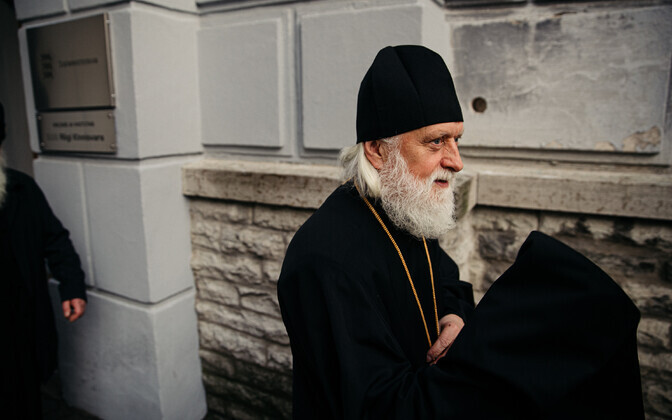
The Ministry of the Interior has given the Estonian Christian Orthodox Church, which remains affiliated with the Moscow Patriarchate, six months to appoint a new metropolitan and sever its ties with the Russian Orthodox Church.
Its previous leader, Metropolitan Eugene (legal name Valeri Reshetnikov), was ordered to leave Estonia in February 2024 after authorities refused to extend the Russian citizen's residence permit on national security grounds.
In its rejection, the Police and Border Guard Board (PPA) cited Reshetnikov's activities and public statements as a representative of the Moscow Patriarchate in Estonia.
The Estonian Internal Security Service (ISS) likewise said both he and Patriarch Kirill, the religious leader of the Russian Orthodox Church, had consistently supported Russia's war against Ukraine and helped advance the Kremlin's security policy in Estonia.
Formerly known as the Estonian Orthodox Church of the Moscow Patriarchate (MPEÕK), the Estonian Christian Orthodox Church (EKÕK) is separate from the Estonian Apostolic Orthodox Church (EAÕK), the legal continuation of the Estonian Orthodox Church (EÕK) under the Ecumenical Patriarch of Constantinople.
--
Editor: Marko Tooming, Aili Vahtla