Expert: Europe can no longer win the broader artificial intelligence race
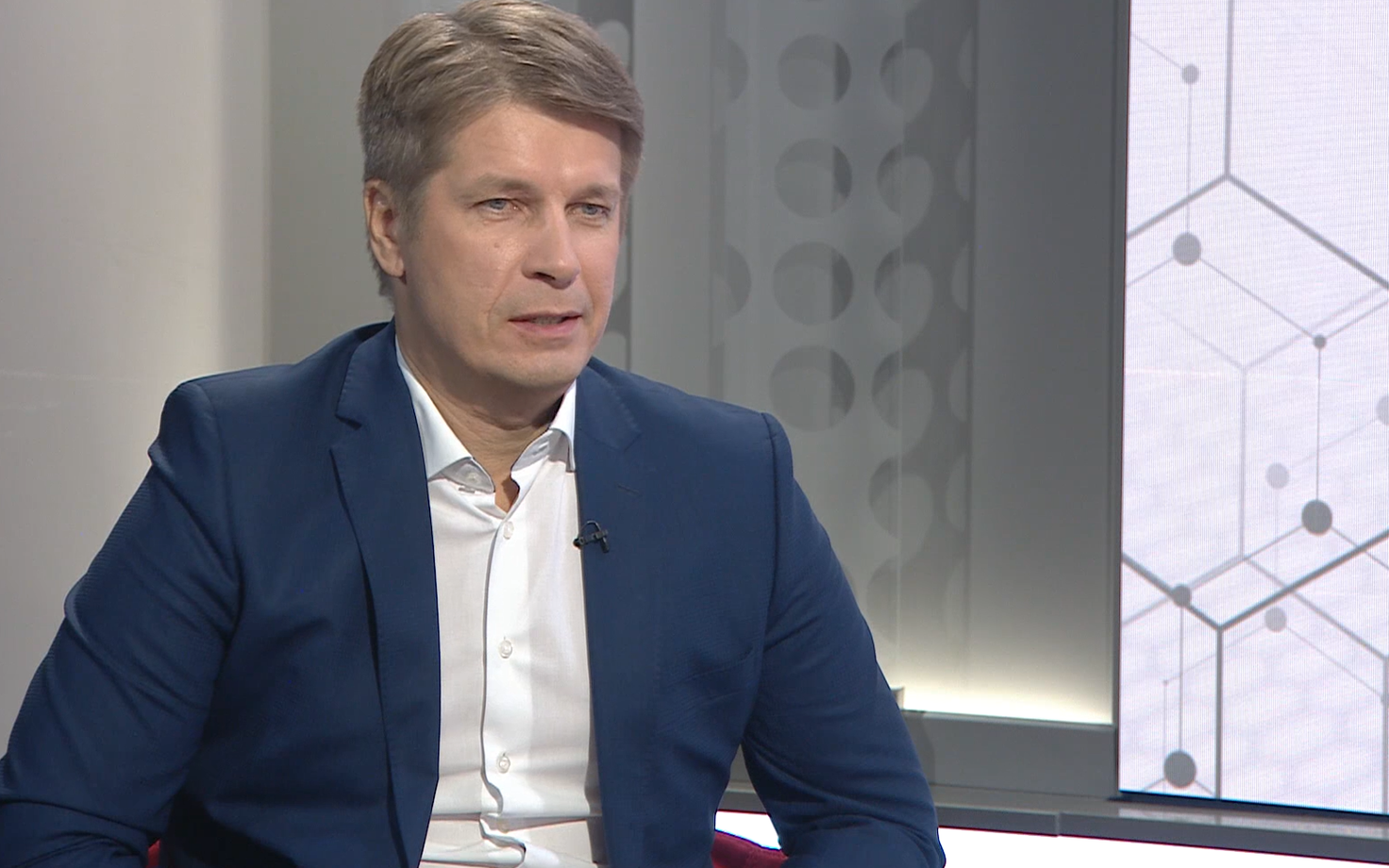
The U.S. economy has become increasingly dependent on continued investment in AI, while Europe's reliance on U.S. technology is worrying, Peter Priisalm tells ERR in an interview.
Did investors who put money into Anthropic essentially buy a lottery ticket?
Yes, they bought a lottery ticket because it is not easy to predict today what the company's cash flows will look like. What is clear, however, is that AI will play a very significant role in our lives in the future and there are very few companies through which investors can add this type of risk to their portfolios.
Last week, Nvidia's board of directors ruled out Jensen Huang's return to his position, yet today we saw him back at work. What does this really tell us about the U.S. stock market and, indeed, about how intertwined politics and business are?
I think this is a very good example of how important a role Nvidia currently plays in the development of the entire AI industry and how the company's fortunes could affect the American economy as a whole.
In a sense, the current situation could be compared to a party where a symphony orchestra is on stage, the music is playing, everyone is dancing and suddenly some men in black coats come in and take the conductor away. The orchestra somehow has to keep playing, but there is no one in the orchestra who could lead the whole ensemble just as successfully. I think Huang's role today is much the same — he has 60 direct reports at Nvidia and I don't think there is a single person who could take over that role overnight without some setbacks.
Looking at Nvidia's current role in the AI industry, many AI companies are able to operate today because Nvidia provides them with guarantees. If they buy the chips they need from Nvidia, manage to set up their data centers and secure long-term contracts with customers, Nvidia in turn guarantees the cash flows of those projects. This means that if this circular financing comes to an end, many companies will no longer be able to continue investing on the same scale.
If we look at the AI industry's impact on the American economy, growth in the AI industry has accounted for two-thirds of U.S. economic growth over the past three quarters. That is a very substantial share.
President Trump made no secret of his personal role in Huang's reinstatement. Why is it important to the U.S. president that a man who has had questionable ties to a woman linked to Chinese intelligence and who has been the subject of several investigations should return to his position? Who really depends on whom here?
If we look at AI's impact on economic growth and take into account the size of the U.S. government's debt burden, the U.S. government cannot afford a sudden economic downturn because managing that debt burden under such circumstances would be very difficult. Experts have said that once debt exceeds 90 percent of gross domestic product (GDP), there is a risk of a snowball effect that can no longer be reversed. In the U.S., that figure currently stands at around 125 percent. In other words, the economy needs to be performing well for politicians to operate relatively normally and retain voters' support.
In other words, the U.S. economy depends on AI delivering on its promise of generating substantial value in the future. And for that promise to be technically viable, it needs Jensen Huang, who has effectively designed this entire circular financing structure, which is essentially one big virtual bubble.
Yes, what matters right now is that investment in this sector continues. To illustrate why that is so important, we could think back to the real estate boom in Estonia and the Baltic states in 2006. It wasn't just real estate developers who were doing well — the entire economy was doing well because the benefits spilled over into other sectors.
The same can be said of AI investment today. A wide range of companies actually benefit from it, from electricity suppliers and various turbine manufacturers to all the people and businesses that, in turn, use the services of those providers. If there were to be a sudden reversal and that investment were cut off, it would be a shock, and I think that is the shock Donald Trump is trying to avoid.
Historically, it has been the countries that master emerging technologies that have risen to great-power status. What options does Europe really have in today's AI race?
At the moment, it appears that Europe can no longer win the broader AI race. Europe must therefore settle for identifying niches in which it can excel, while making use of competing models to some extent.
There is one well-known European AI company, Mistral, whose technology can be used by governments. As I understand it, it offers a more efficient and somewhat faster open-source model. Perhaps other companies will eventually emerge that can similarly identify niches in which they could be the best.
What is interesting is that we are talking about this major AI revolution today and it is being driven by companies that did not exist five or six years ago. We probably cannot imagine right now which companies will exist five or six years from now, but hopefully European companies will have a role to play then, too.
Europe's dependence on America raises questions on several fronts. One, of course, is our strategic dependence on the so-called U.S. security umbrella. But if Microsoft Outlook stops working, for example, a large proportion of Europeans might as well call it a day because emails simply aren't going through — and that happened quite recently. If America can, figuratively speaking, switch off Europeans' email, how independent is Europe really?
I think the entire world is dependent on major American technology companies today, with virtually every country in the world using their services. They control the economy on a global scale. If you talk to IT service providers here in Estonia, too, they will tell you outright that if Microsoft's services go down, the Estonian economy effectively comes to a standstill because businesses and organizations are essentially unable to continue operating.
--
Editor: Marcus Turovski, Johanna Alvin


